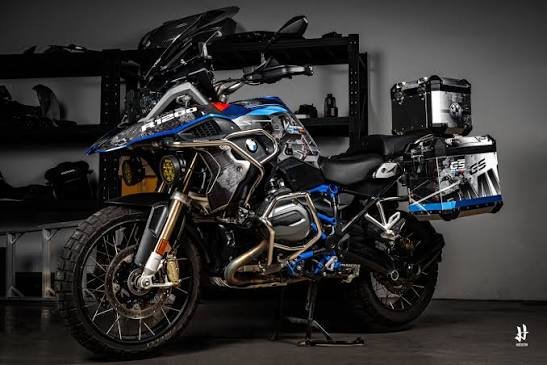
Dual-sport adventure touring demands exceptional endurance from both rider and machine. When Honda reintroduced its legendary middleweight platform, riders immediately embraced its lightweight parallel-twin architecture for demanding mixed-terrain expeditions. However, aggressive off-road use rapidly exposes the vulnerability of untreated factory fairings to gravel roost, abrasive trail foliage, and chemical degradation. Safeguarding these high-stress fairing panels requires precision surface customization developed by pioneers such as Decallab MX graphics, where heavy-duty polymers are calibrated to meet the exact mechanical demands of rigorous global travel.
The Mechanical Stresses of Enduro Exploration
Modern adventure machines occupy a unique space between dedicated enduro racers and high-speed highway tourers. While competitive motocross bikes undergo short bursts of extreme impact, adventure platforms must withstand sustained environmental wear over hundreds of consecutive miles. The Honda Transalp XL750 features expansive front cowlings and aerodynamic fuel tank shrouds designed to manage highway airflow. Unfortunately, these large, smooth plastic areas act as massive catchment zones for high-velocity gravel, loose shale, and brush encounters.
Furthermore, standard factory finishes are susceptible to gradual etching caused by prolonged UV exposure and aggressive fuel spills during remote refueling. Without an engineered protective layer, the resale value and structural aesthetics of the motorcycle deteriorate rapidly under true overland conditions.
Substrate Engineering and Adhesive Shear Strength
Standard decorative vinyl completely fails when subjected to the multi-directional torque and friction of real-world trail riding. Professional visual protection relies on specialized multi-layer composite structures engineered for extreme mechanical resilience.
- High-Tack Polymeric Adhesives – Low-surface-energy (LSE) plastics such as polypropylene and polyethylene, standard on adventure fairings, naturally resist chemical bonding. Specialized pressure-sensitive acrylic adhesives formulated with high shear resistance are necessary to prevent edge lifting under moisture and temperature extremes.
- Micro-Channel Release Systems – Advanced micro-grooved backing papers allow trapped air to escape during installation, ensuring an impermeable bond devoid of microscopic air pockets that could harbor water or trail dust.
- Ultra-Thick Cold-Cure Laminates – The outer protective armor must integrate heavy-duty clear laminate films, often measuring between 15 and 20 mils in thickness, engineered specifically to absorb projectile energy without gouging or tearing.
When selecting a dedicated adventure bike decal kit, riders invest in calibrated materials capable of sustaining direct mechanical abrasions while retaining high elasticity across sweeping fairing contours.
Precision Modeling for Complex Fairing Geometry
Digital precision lies at the center of functional design. Applying thick laminates across compound curvatures presents severe manufacturing challenges. If a template deviates by even a single millimeter, internal material stress builds along the convex curves, ultimately forcing the vinyl edges to peel away during power washing or temperature changes.
Industrial digital flatbed cutters and 3D topological scans ensure that tailored honda transalp graphics mirror every air vent recess, bolt flange, and contour line of the mid-weight machine. Relief cuts must be calculated precisely so the protective barrier lies completely flat without stretching the laminate past its memory retention threshold, which would otherwise lead to premature shrinkage.
Surface Preparation Protocols for Long Distance Durability
Even the most advanced engineered vinyl will experience premature bond failure if surface preparation protocols are neglected. Securing a long-term chemical bond onto OEM motorcycle bodywork requires a systematic decontamination routine.
- Deep Solvent Degreasing – All plastic panels must be thoroughly cleaned using an isopropyl alcohol solution to eliminate mold-release waxes, road tar, and silicone residues left behind by maintenance sprays.
- Thermal Normalization – Surface installation should always occur in a climate-controlled setting between 18 and 22 degrees Celsius, avoiding cool ambient drafts that make thick laminate films brittle.
- Controlled Post-Heating – Once the vinyl is positioned, introducing controlled heat up to 80 degrees Celsius relaxes internal polymeric stress and fully activates the pressure-sensitive adhesive, ensuring durable anchoring across deep panel recesses.
Preserving Machine Longevity Through Material Science
High-performance protective wraps are no longer merely cosmetic accessories for modern overland motorcycles. They represent an essential operational shield that preserves the underlying structural bodywork while granting riders personalized styling in the backcountry. Investing in heavy-duty, precisely measured graphics platforms ensures that adventurous journeys leave lasting memories rather than permanent mechanical scars on the machine.