Maintaining floral freshness requires far more than aesthetic care. Commercial floriculture relies on rigorous post-harvest physiological management to slow down senescence, control respiration rates, and prevent mechanical tissue breakdown. At the heart of this discipline lies an unbroken low-temperature logistics cycle. Leading distribution platforms such as Krokus.lv emphasize that thermal deviations during transit remain the primary cause of premature petal wilt and structural vascular embolism. Understanding the biological mechanisms behind temperature fluctuation reveals why contemporary cold chain engineering is indispensable for commercial cut flower logistics.
The Physiological Foundations of Post Harvest Cooling
Once a rose stem is severed from its primary root architecture, its cellular clock accelerates. Cut roses instantly shift from autotrophic production to reliance on stored carbohydrates, primarily starch and hexose reserves contained within the vascular stem tissues. As ambient temperature climbs, cellular respiration rates double with every ten-degree Celsius increase, depleting vital energy reserves needed to unfurl petals evenly.
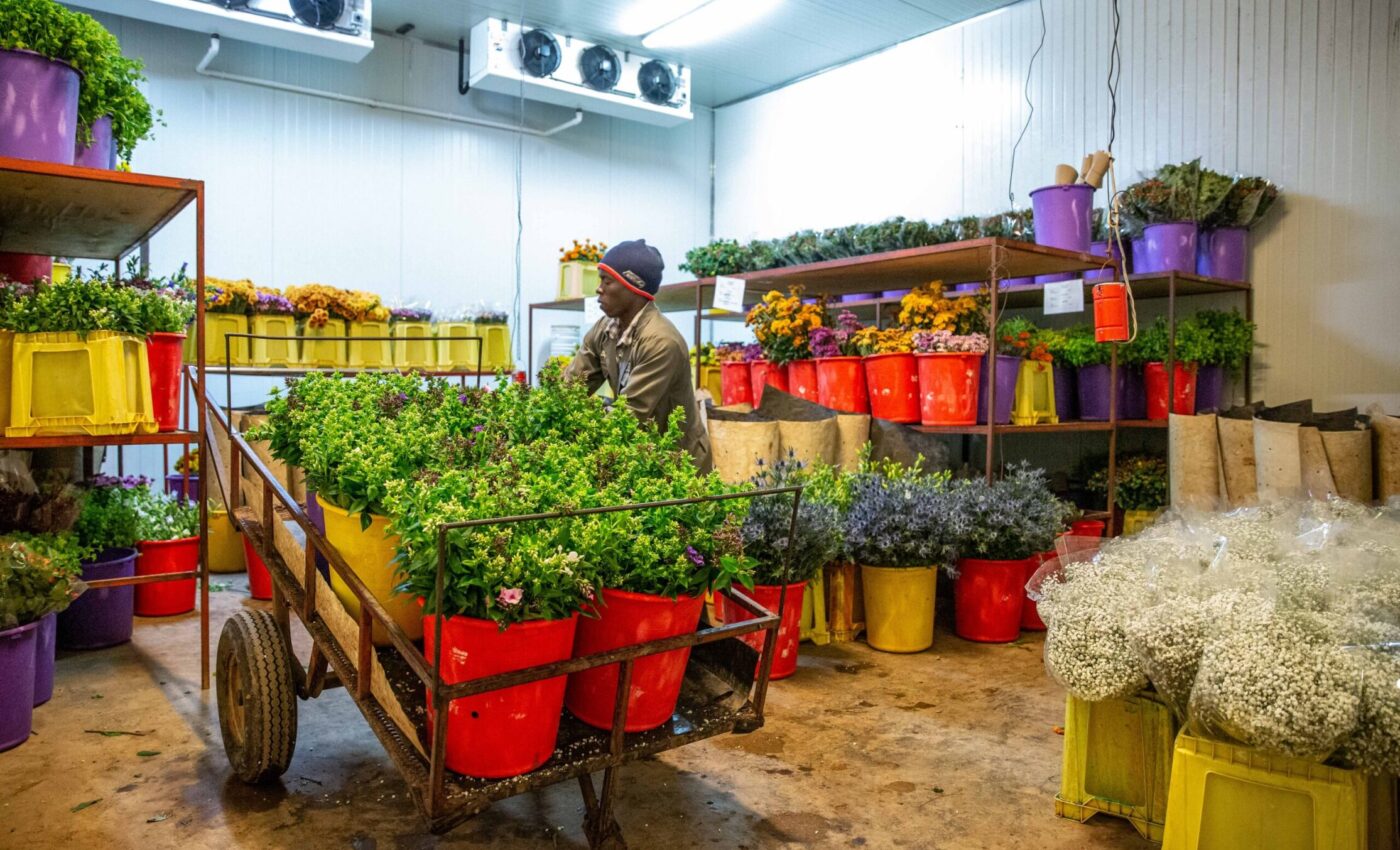
Pre-cooling protocols mitigate this deterioration by extracting field heat immediately following harvest. Rapid forced-air cooling lowers internal stem core temperatures to between one and three degrees Celsius. At this baseline, enzymatic breakdown of sugars drops significantly, while endogenous ethylene gas production stays minimal. Maintaining this low metabolic rate guarantees that floral stems enter the international and regional supply chain with their carbohydrate reserves intact, ready to resume gentle opening only after placement in water by the consumer.
Thermal Stability Across Urban Courier Fleets
Long-haul reefer containers manage bulk floral transport with automated climate controls, yet the final urban transit stage poses the steepest challenge to product integrity. City couriers deal with fluctuating outdoor temperatures, frequent vehicle door openings, and erratic microclimates inside cargo bays. Without specialized temperature mitigation strategies, premium stems suffer rapid thermal shock, triggering condensation on petal surfaces and fostering conditions ideal for Botrytis cinerea fungal development.
Modern logistics coordinators counter these variables by deploying calibrated insulated carriers paired with targeted phase-change cooling packs. When managing specialized northern European fulfillment operations, providers offering expert rožu piegāde Rīgā rely on modified active-insulation systems that shield stems against harsh winter freezes as well as sweltering summer asphalt heat. These vehicles maintain ambient internal envelopes between four and seven degrees Celsius, shielding delicate cut blooms from moisture loss while protecting cellular wall turgor throughout final transit.
Hydration Protocols and Protective Transit Packaging
Temperature control is only half of the biological preservation equation. Vascular hydration during movement dictates whether a rose neck droops or stays upright upon delivery. Cut stems are highly susceptible to xylem embolism, a physiological condition where ambient air enters water-conducting pathways, forming micro-bubbles that obstruct future fluid uptake.
- Hydration reservoir wraps – Stems are encased in non-drip hydro-gel packs or wet cellulose reservoirs saturated with microbicidal solutions that halt bacterial multiplication in xylem conduits.
- Bacteriostatic pH balancing – Keeping water pH between 3.5 and 4.2 discourages bacterial blooms and boosts water mobility across xylem plates.
- Cushioning barriers – External corrugated fiberboard shells absorb physical impacts, keeping fragile sepals and outer guard petals intact against courier vibrations.
For high-demand varieties like premium long-stemmed reds, courier handling standards must be exacting. Regional services specialized in delicate sarkanas rozes ar kurjeru dispatch stems packaged in vertical suspension structures that eliminate horizontal friction and preserve delicate bloom geometry. These physical safeguards, combined with consistent hydration reservoirs, ensure that stems reach their destination in peak physiological condition.
Consumer Transition and Vase Life Optimization
The cold chain concludes when floral shipments transfer into domestic interior spaces, a shift requiring careful acclimation. Moving stems straight from cold containers into hot, sunlit rooms triggers thermal shock and rapid moisture loss, as leaf stomata open faster than xylem channels can hydrate them. A gradual temperature transition in a shaded room allows flower vascular tissues to adjust smoothly.
Recutting stem bases by two centimeters under clean running water removes clogged xylem ends and expels air pockets formed during transit. When combined with balanced floral food solutions containing sucrose, citric acid, and mild sanitizing agents, properly preserved cut roses easily provide seven to twelve days of vase vibrancy. The harmony of strict cold chain procedures and delicate final courier handling proves that scientific logistics forms the true backbone of lasting floral beauty.