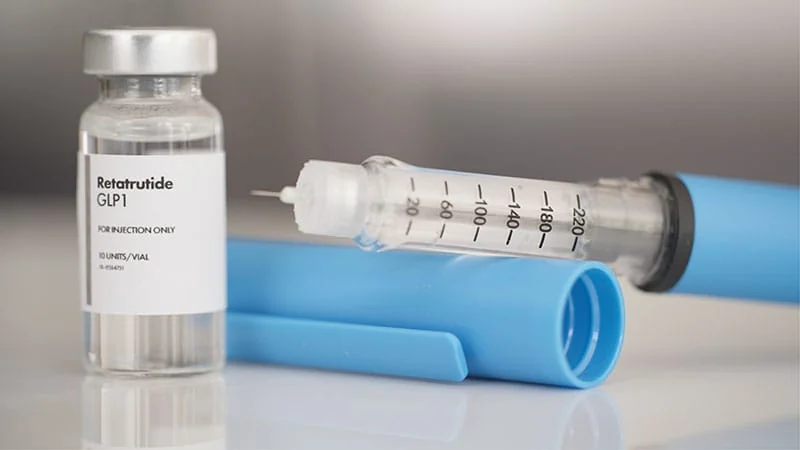
Retatrutide Price UK: What 144 Suppliers Reveal About the Market
There is a specific moment in any unfamiliar market where the price stops being informative. In the UK research peptide trade, that moment arrives quickly. The same compound, stated in the same nominal quantity, is listed from £16.95 at the bottom of the market and at several multiples of that at the top — and nothing in the listing itself explains the difference.
That spread is not an anomaly to be averaged away. It is the market’s actual structure showing through, and it is worth understanding because it is the same pattern that appears in any young, lightly regulated supply chain where specification is not standardised and buyers cannot easily verify what they are being sold.
Why the Same Compound Carries a Four-Figure Spread
The first cause is unit confusion, and it is more consequential than it sounds. Some suppliers quote per kit. Some quote per container. Some quote per milligram. Kit sizes themselves are not standardised across the market, and the stated quantity is not always the peptide content — a figure that can refer to the total material in the box.
A listing that looks cheap on its headline can invert once the quantity is accounted for. A listing that looks expensive can undercut the apparent bargain. Neither is necessarily dishonest; the market simply has no convention.
The second cause is documentation depth. A purity claim of 98% or higher is near-universal across UK listings. Whether that figure is attached to a named batch, whether a named laboratory performed the analysis, whether the test date is recent, and whether storage was temperature-controlled are four separate variables that a single price column cannot express.
The third is sourcing and storage economics. Cold-chain storage is not free. A supplier maintaining temperature control from manufacture through dispatch carries a cost that a dropshipper does not, and that cost lands in the price. It is one of the few price differences in this market that genuinely reflects product integrity rather than presentation.
Cost Per mg Is the Only Honest Comparison
Normalise every listing to cost per milligram before comparing anything else. Total price, divided by total milligrams supplied. That single step removes most of the apparent variation and leaves the real differences visible.
Two checks make the calculation honest. Confirm whether the stated kit size refers to peptide content or total material. Then check whether the headline quantity includes diluent, accessories or packaging, which inflate apparent value without adding compound.
Once normalised, price tells you what a supplier charges for a given quantity. It does not tell you what the documentation standard is, and it does not tell you how the material was stored. Treat cost per mg as the entry point to a comparison, never as its conclusion.
What a Purity Percentage Does Not Tell You
High-performance liquid chromatography separates compounds by retention time and reports how much of the sample is the target compound, expressed as a percentage area. It is a measure of quantity.
It is not a measure of identity. A compound with a similar retention profile can produce a comparable purity figure without being the compound claimed. Mass spectrometry answers the identity question; HPLC answers the quantity question. A certificate carrying only one of the two is incomplete, however high the percentage on the page.
Batch traceability completes the check. The certificate must reference an identifier matching the material actually in hand. Generic certificates presented as though they were batch-specific are routine in this market, and they describe nothing about the product being purchased. A certificate dated three years ago describes a historical batch, not current stock.
For buyers used to markets where a specification sheet is a contract, this is the adjustment to make: in this market, the specification sheet is frequently marketing collateral.
Where the UK Market Sits Right Now
As of November 2026, the Retatrutide price comparison at ViralPeps tracks 144 verified UK suppliers, with the lowest listings starting at £16.95 and purity claims at 98% or higher common across the board. Prices are checked daily, which matters in a market where stock and pricing move faster than any static directory can follow.
The useful number is not the floor. It is the width of the band. A market where the same specification trades across a wide range is a market where buyers are still paying for things they cannot see, and where the discipline of normalising to cost per mg changes the outcome more than any single supplier choice.
Reading the Mechanism Before the Price
Single-market data invites over-reading, and price data invites more of it than most. The guard against that is mechanism: knowing what the compound actually does tells a buyer which specification differences matter and which are decoration.
Retatrutide is a triple agonist engaging GIP, GLP-1 and glucagon receptors. The first two are the incretin pair that made the dual agonists notable. The third is the departure — glucagon receptor activation raises energy expenditure, moving the metabolic balance toward oxidation rather than storage. That is a complementary mechanism rather than a stronger version of the same signal, and it is the reason Retatrutide exists as a separate design rather than a potency optimisation.
For a fuller treatment of the receptor pharmacology, the published dose-ranging work and the open questions in the literature, the Retatrutide research summary sets out the mechanism in more depth than a pricing article can justify. Anyone sourcing the compound for laboratory work should be reading that before reading a price column.
What the Published Research Supports
Retatrutide is a triple agonist engaging GIP, GLP-1 and glucagon receptors. The glucagon component is the departure from earlier incretin compounds: receptor activation raises energy expenditure rather than acting on intake alone.
The published trial programme reported dose-dependent weight reduction across cohorts, with the higher dose arms producing the largest mean changes, alongside shifts in several secondary metabolic markers. Those findings are real and peer-reviewed, and they are frequently over-read.
What they do not establish is long-term safety or hard outcomes. Phase 2 answers whether a signal exists and at what dose. Phase 3 answers whether that signal holds over years. Retatrutide sits in the gap between those questions. It is unapproved by the MHRA, EMA and FDA for any indication, and the trials ran in clinical populations with pharmaceutical-grade material and continuous medical supervision — which is not a description of laboratory research. The distinction is not a technicality; it is why every listing in this market is supplied for research use only.
The Practical Summary
Normalise to cost per mg. Confirm what the stated quantity refers to. Check for identity and batch rather than a purity percentage alone, and check the test date rather than assuming recency. Compare across a market rather than against whichever listing ranks first.
None of that tells a buyer which compound suits a given research protocol. What it does is stop a price comparison from being mistaken for a quality comparison — the single most common error in a market this young, and the one that costs buyers most.
—
About the Author
ViralPeps Research Team publishes UK peptide price comparison and supplier verification data. ViralPeps tracks verified UK suppliers with prices checked daily and publishes purity and TrustScore data alongside cost per milligram. All compounds discussed are supplied strictly for laboratory research use only and are not intended for human consumption