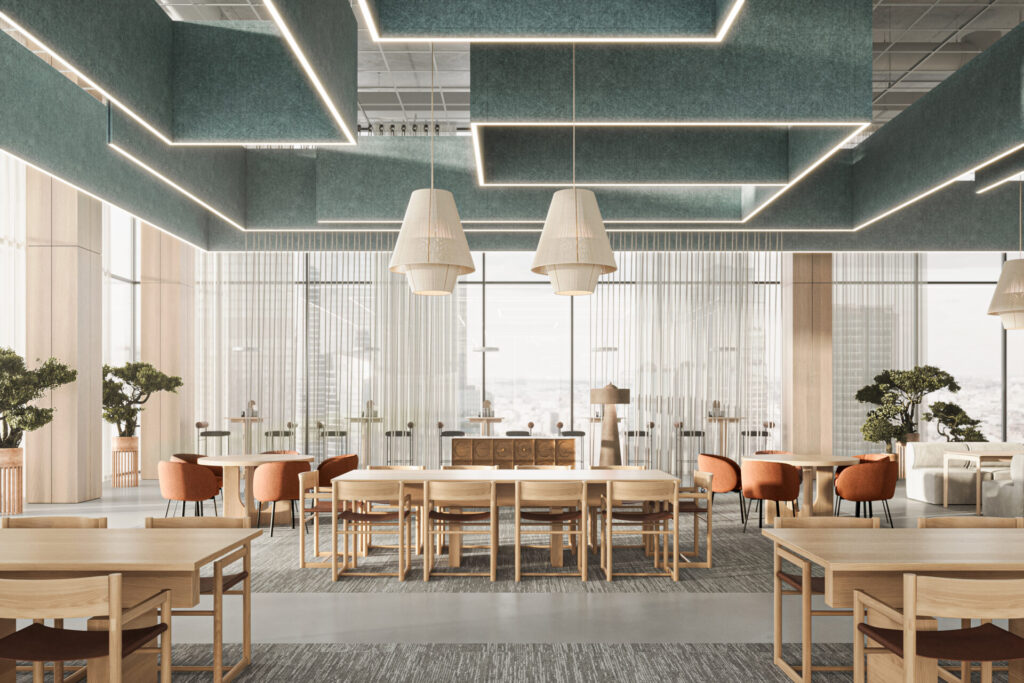
Modern interior architecture frequently leans toward open-concept layouts, expansive glazing, and hard, minimalist surfaces such as polished concrete and architectural stone. While these choices cultivate a crisp, contemporary aesthetic, they also present subtle challenges regarding tactile warmth and acoustic balance. Without intentional intervention, sound reverberates off flat planes, and rooms can inadvertently feel stark. In response, design studios are turning toward biological materials and curved silhouettes that bridge the gap between structural clarity and sensory calm. Incorporating artisanal timber luminaires has become a definitive design strategy, epitomized by the nuanced approach of Frellio Scandinavian lighting, which balances pristine northern craftsmanship with mindful spatial composition.
The Acoustic Nuances of Natural Wood Profiles
Timber possesses an inherent cellular architecture that differs markedly from cold, reflective metals or structural glass. Hard surfaces act as acoustic mirrors, reflecting sound waves across open dining rooms, executive workspaces, and residential lofts. Wood, conversely, offers natural dampening properties. Its porous grain structure absorbs select higher frequencies while gently diffusing ambient sound, softening the auditory profile of heavily trafficked spaces.
When wood is formed into layered, suspended lighting fixtures, this acoustic property is enhanced. The physical presence of a multi-planar luminaire suspended in the middle acoustic field interrupts rising sound waves, disrupting echo paths before reverberation reaches bare ceilings. Beyond sheer decibel management, this creates an atmosphere that designers refer to as auditory intimacy – a subtle softening of voices, footsteps, and the hum of daily domestic life.
Organic Geometry and the Biophilic Luminaire
Linear lines dominate structural engineering, yet human psychology naturally responds with reduced stress when presented with curvilinear, organic geometries. This relationship forms the core foundation of biophilic design. When overhead fixtures mirror natural growth patterns, floral calyxes, or flowing water lines, they introduce visual rest points that break up the grid of modern rooms.
Achieving this synergy requires precise structural manipulation of wood veneers and sustainably harvested timbers. Specifying authentic handcrafted wooden pendant lights ensures that each piece retains the subtle, individual grain deviations that synthetic composite alternatives cannot mimic. These fixtures do not simply emit functional foot-candles; they curate emotional resonance through layered shadows and rhythmic contours.
By prioritizing parametric curving, steam-bending, and precision joinery, artisans create profiles that transform throughout the day:
- Daylight reveals the tactile depth, grain variations, and structural joinery of natural timber.
- Dusk shifts the fixture into an active focal point, where internal lighting filters outward to cast soft, directional shadow gradients across adjacent planes.
- Late evening allows the fixture to define a cozy, isolated zone of comfort, preventing ambient illumination from scattering aimlessly across broad ceiling heights.
Material Integrity in Precision Wooden Luminaires
Selecting appropriate timber species plays an essential role in balancing weight, durability, and luminous warmth. Heavy hardwoods like walnut and dark oak lend themselves to bold, grounding centerpieces, whereas lighter woods such as ash, beech, and Scandinavian birch cultivate an airy, floating presence. Birch, in particular, is prized for its tight grain and pale, reflective internal layers, which enrich warm-spectrum LED light without tinting it toward unnatural yellow or orange hues.
Consider, for instance, the refined construction of the Östra birch pendant lamp, which leverages thin, bentwood geometry to guide luminous dispersion while functioning as an airborne sculptural focal point. The delicate balance achieved by such designs rests on allowing light to wash across the timber’s surface, turning the shade itself into an organic secondary reflector rather than an impenetrable barrier.
Practical Guidelines for Architectural Placement
Integrating organic timber fixtures requires careful planning regarding scale, mounting height, and color temperature compatibility:
- Scale in Proportion to Room Volume: An organic fixture should balance the visual mass of the furnishings beneath it. For an eight-person dining table, aim for a diameter or width that spans roughly one-third to one-half of the table length to maintain proportion without crowding sightlines.
- Suspension and Clearance: In dining zones, the bottom rim of a suspended pendant should ideally rest between thirty and thirty-six inches above the tabletop, ensuring glare-free sightlines across conversations while capturing upward speech waves within the shade’s acoustic zone.
- Color Temperature Alignment: Pair natural wood shades with high CRI (Color Rendering Index > 90) LED light engines tuned between 2700K and 3000K. Cooler light sources clash with warm timber tones and can render the wood looking dull or unnaturally desaturated.
Creating Emotional Harmony Through Mindful Materiality
Modern residential design continues to shift away from sterile, museum-like minimalism in favor of grounded, textured environments that support human well-being. By integrating organic geometry, acoustic-softening woods, and considered luminaire craftsmanship, spaces achieve a balanced dynamic between architectural precision and sensory comfort. Contemporary wooden fixtures serve not simply as sources of illumination, but as tactile anchors that transform modern interiors into tranquil, acoustically balanced sanctuaries.