There’s nothing particularly refreshing about pouring yourself a glass of water that smells faintly like a swimming pool. Add a few visible particles or an unpleasant aftertaste, and suddenly, bottled water starts looking more appealing.
But buying bottled water every week isn’t necessarily the most practical long-term solution.
Many household water quality concerns can be addressed through appropriate filtration. Whether you’re dealing with suspended particles, disinfectant-related odors, or unpleasant flavors, understanding how different filters work can help you make a sensible investment.
Rather than treating water at a single faucet, many homeowners are exploring centralized filtration to improve water quality across their properties. It’s an approach worth understanding, especially when the same concerns appear in several rooms.
Why Does Tap Water Sometimes Taste Unpleasant?
Municipal water suppliers commonly use disinfectants to control harmful microorganisms and maintain water quality throughout distribution networks. Chlorine plays an important role in this process, although not everyone enjoys its noticeable flavor.
A persistent chlorine taste can make drinking water less appealing and influence the flavor of beverages such as coffee, tea, and homemade lemonade.
Some people barely notice it, while others find even a mild disinfectant flavor unpleasant.
Activated carbon filtration can help reduce chlorine-related tastes and odors when the equipment is appropriately designed and maintained.
However, if your water suddenly develops a strong or unfamiliar chemical smell, it’s worth contacting your water supplier rather than assuming routine disinfection is responsible.
Understanding the source of an unpleasant taste is always a good starting point.
Where Does Sediment in Household Water Come From?
Sediment can enter household water supplies through several routes. Aging plumbing, naturally occurring particles in groundwater, and disturbances within distribution systems are possible contributors.
You might notice tiny particles settling at the bottom of a drinking glass or accumulating inside faucet aerators.
Private well owners may encounter sand or silt, depending on local groundwater conditions and well construction.
While visible particles aren’t necessarily harmful, they can create maintenance concerns and make water less appealing.
Sediment filtration helps capture suspended material before it travels further through connected household plumbing. Depending on the filter’s design, it can remove particles of different sizes.
It’s a relatively straightforward treatment method, but selecting the appropriate filtration capacity matters more than many homeowners realize.
Combining Two Filtration Methods for Better Results
Different water quality problems require different treatment technologies. A filter that captures sand won’t necessarily address unpleasant chemical odors, and a carbon filter isn’t always the best first defense against heavy sediment.
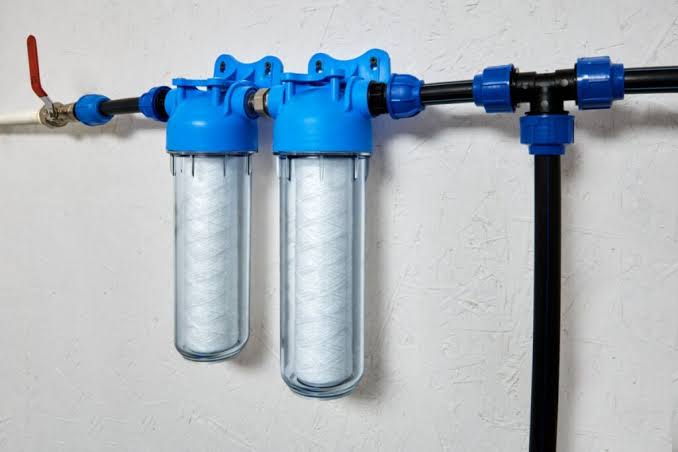
This is where whole-home sediment and carbon filtration offers a practical approach to managing multiple household water concerns.
A sediment filter typically serves as an initial treatment stage, capturing suspended particles. Water then passes through activated carbon, which can reduce chlorine and certain organic compounds through a process known as adsorption.
Using these technologies together can help protect the carbon media from excessive sediment accumulation while addressing a broader range of water quality issues.
The exact performance depends on filter specifications, incoming water conditions, and maintenance practices.
Enjoying Better Water Beyond the Kitchen Sink
A small drinking water filter can be useful, but its benefits generally stop at the faucet where it’s installed.
Centralized filtration takes a different approach by treating incoming water before it reaches connected household fixtures.
Modern residential whole-house filters can provide a convenient way to address specific sediment and disinfectant-related concerns across bathrooms, kitchens, and other areas of the property.
Imagine taking your morning shower without noticing that familiar chlorine odor. Or filling a pot for dinner without wondering why tiny particles are floating in the water.
These improvements may seem modest, but they can make everyday routines more enjoyable.
There’s also the convenience of maintaining a centralized treatment arrangement rather than managing several separate filtration devices around the house.
Can Filtration Help Protect Household Plumbing?
Household plumbing components regularly encounter whatever substances are present in the incoming water supply.
Over time, sediment can accumulate within faucet aerators, valves, and certain appliance components. Excessive particle buildup may contribute to restricted water flow and additional cleaning requirements.
Appropriate sediment filtration can help limit these problems.
However, filtration shouldn’t be confused with water softening. Standard sediment and carbon filters generally don’t remove the dissolved calcium and magnesium responsible for hardness.
If chalky deposits around faucets or scale inside water heaters are your main concerns, additional treatment may be necessary.
Knowing the difference between these technologies can prevent disappointing purchases and unnecessary expenses.
Choosing Equipment Without Overcomplicating Things
Water filtration equipment comes in various sizes, configurations, and treatment capacities. Getting caught up in impressive product descriptions is easy, particularly when several systems appear to offer similar benefits.
Start with reliable water testing and consider your household’s consumption patterns.
Filter capacity, water pressure, peak flow requirements, and replacement costs should influence your decision.
Ask whether the equipment has independent certification for the specific substances you want to reduce. Also, find out how frequently replacement filters or media are required.
A simple, appropriately selected system often provides greater practical value than an elaborate setup with unnecessary treatment stages.
Regular Maintenance Keeps Filtration Working
Filters don’t last forever. Sediment cartridges gradually collect particles, while activated carbon eventually loses its ability to effectively reduce targeted substances.
Following recommended replacement schedules helps maintain treatment performance and prevent unnecessary water flow restrictions.
If unpleasant tastes return or water pressure changes noticeably, investigate the cause rather than ignoring it.
Making Better Water Part of Everyday Life
Good water quality isn’t a luxury reserved for expensive homes. With appropriate testing, suitable filtration equipment, and regular maintenance, homeowners can address many familiar water concerns.
Sometimes, the most satisfying household improvements are surprisingly ordinary: a fresher glass of water, a more pleasant shower, or fewer particles collecting around kitchen fixtures.
Those small comforts, experienced every day, are what make thoughtful water treatment a worthwhile investment.